Are you ready for your portfolio to move at the speed of modular finance, commission-free payments, and decentralized artificial intelligence?
At Bitso, we know that the financial future is built on movement. That’s why our mission is to give you the tools and assets you need so your money doesn’t stay still, but moves at the speed of innovation.
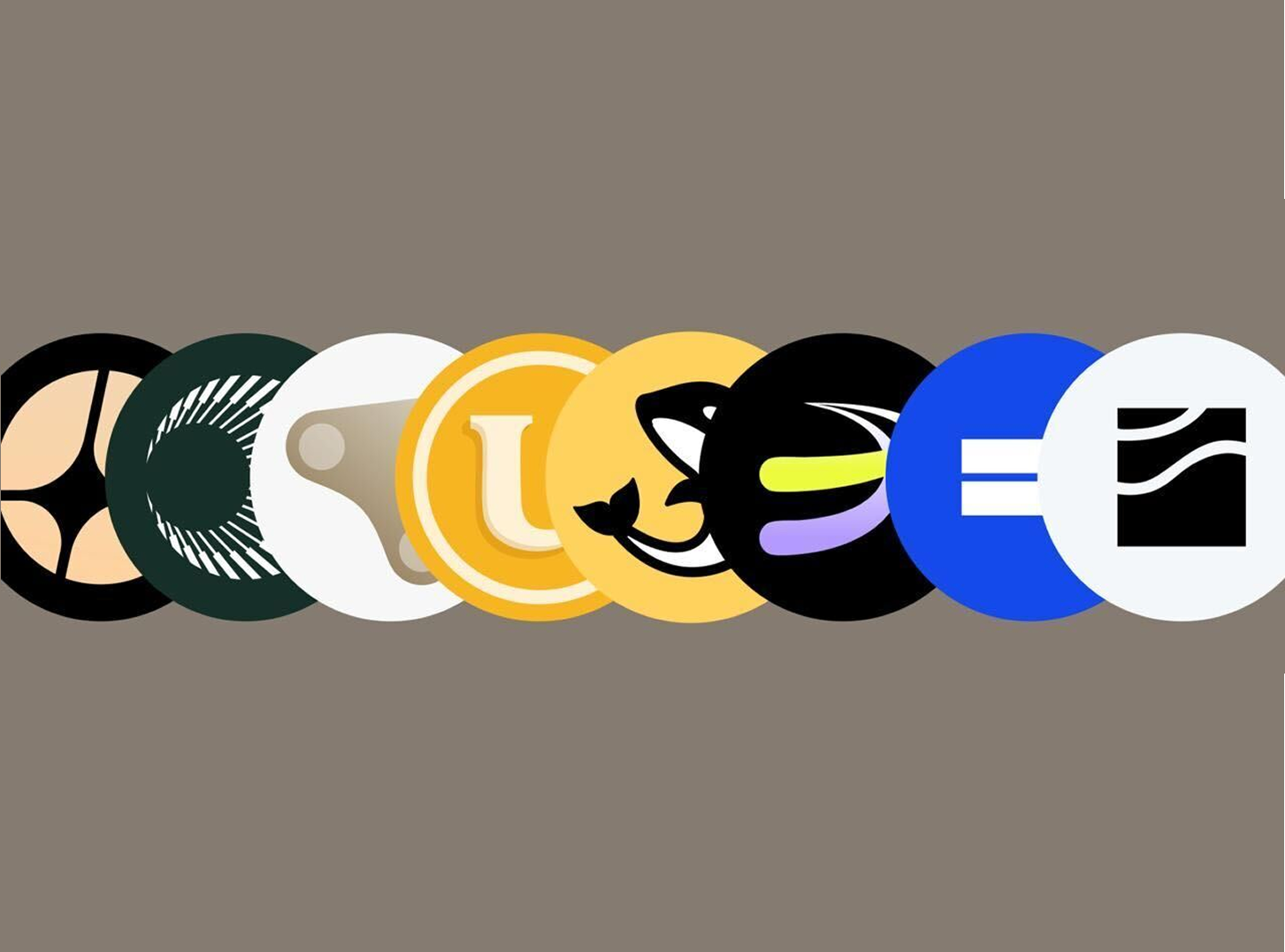
Today, we are ready to take the conversation and your portfolio to the next level. Eight new assets are arriving on our platform: ASTER, XPL, KITE, USELESS, ORCA, SQD, DEEP, RLS. From next-generation decentralized exchanges and memecoins with irony to secure connection with traditional finance, each token offers you a new way to diversify your strategy beyond the obvious.
In this article, we’ll tell you a bit about each project so you can learn more about them.
Meet the 8 new additions
We present the new assets with a simple approach, so you can get to know them better and diversify your portfolio with knowledge.

ASTER
ASTER is the token of Aster, a next-generation decentralized exchange (DEX) offering perpetual and spot trading across multiple networks. Aster is distinguished by offering liquid staking tokens (asBNB) or yield-generating stablecoins (USDF) as collateral, providing unparalleled capital efficiency.
- What is it for? Aster is powered by Aster Chain (an L1 blockchain). The token allows 24/7 non-custodial trading of crypto perpetuals and traditional stocks, with a user experience similar to a centralized exchange, but with the transparency of DeFi.
- Use Case: You can use stablecoins that already generate yield as collateral to open leveraged positions, maximizing the use of your capital without losing self-custody.

XPL
XPL is the native token of Plasma, an EVM-compatible Layer 1 blockchain built specifically for international stablecoin payments, allowing fee-free USDT transfers.
- What is it for? The XPL token is used to pay gas fees, secure the network through staking, and reward validators. Plasma is distinguished by absorbing gas fees for USDT transfers at the protocol level, allowing users to send payments without needing to hold XPL tokens for gas.
- Use Case: You can send USDT anywhere in the world without worrying about gas fees, making Plasma ideal for remittances and payment-focused applications.

KITE
KITE is the native token of Kite AI Network and is used for staking, protocol rewards, and participating as a module owner, validator, or delegator. The platform enables transactions between AI agents, thanks to native compatibility with the x402 agent payment standard.
- What is it for? By combining cryptographic identity, programmable governance, and verifiable delegation, KITE provides the key components needed to enable secure, autonomous payments at scale between different artificial intelligence agents.
- Use Case: An AI agent that needs to access data or services from another agent on the network can make the payment autonomously using KITE as collateral and medium of exchange.

USELESS
Useless Coin (USELESS) is a memecoin launched on Solana that seeks to criticize the crypto industry’s obsession with utility, by embracing meaninglessness and adopting uselessness as its identity.
- What is it for? USELESS is a speculative asset whose value is defined through market dynamics driven by memes. It rejects traditional utility claims: it has no staking, governance mechanisms, or revenue generation.
- Use Case: USELESS is an investment driven by meme culture and market dynamics; its value is based on its intentional uselessness, according to its whitepaper which describes it as “in effect, useless.”

ORCA
ORCA is the native governance token of Orca, a decentralized exchange (DEX) and automated market maker (AMM) on the Solana network, focused on capital efficiency and people-centric design.
- What is it for? Holders of ORCA can participate in protocol decision-making, including changes to fee structures, prioritization of new features, and incentive allocation. The platform uses Whirlpools, a concentrated liquidity model, to reduce price slippage for traders.
- Use Case: If you are a liquidity provider, you can use ORCA to vote on Whirlpools parameters, allowing you to offer liquidity within customized price ranges to increase your capital efficiency.

SQD
SQD is the native token of the SQD Network (formerly Subsquid), a data lake and decentralized query engine, designed to offer developers and institutions high-performance, permissionless access to blockchain data.
- What is it for? The SQD token is used for staking, governance, and priority data access via the SQD Portal. It powers a stake-to-query model where users lock their tokens for faster data access speed. Node operators receive rewards for storing information and processing queries.
- Use Case: A dApp developer needs to query historical or real-time data from over 190 networks. They can lock SQD to guarantee priority access and obtain the information more than 10 times faster than the competition.

DEEP
DEEP is the native token of DeepBook, a next-generation decentralized Central Limit Order Book (CLOB) built on Sui. It leverages Sui’s parallel execution and low fees to offer a high-throughput, low-latency on-chain exchange.
- What is it for? DEEP is used to pay trading and pool creation fees. Holders who stake DEEP enjoy fee discounts (up to 20% lower) and incentives. As Sui’s native liquidity layer, it provides deep liquidity for trading pairs and enables sophisticated trading functionalities.
- Use Case: A trader uses staked DEEP to get the maximum discount on a trade, benefiting from the ultra-fast Sui settlement time (~390ms) offered by DeepBook.

RLS
RLS is the native token of Rayls, a financial infrastructure blockchain designed to connect Traditional Finance (TradFi) with Decentralized Finance (DeFi), focusing on secure and regulated asset tokenization.
- What is it for? RLS is used for validator staking, protocol governance, and transaction fee payments. Rayls’ architecture combines an EVM-compatible public chain (Rayls Public Chain) with private blockchains hosted by real financial institutions.
- Use Case: Rayls is already generating volume with financial institutions. By holding RLS, you participate in the security and governance of the platform that enables large institutions to tokenize assets securely and regularly.
How are these new tokens listed on Bitso?
Our purpose is to give you access to new tokens faster than anyone else. To achieve this while maintaining the security you expect, we implement the Limited Operations category.
What do Limited Operations mean?
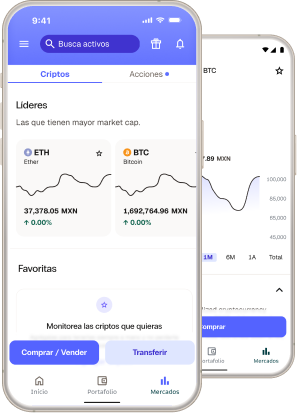
The latest cryptos that have been listed are only available for buying and selling within the Bitso app.
- You can also send or receive them via Bitso Transfer.
- This approach allows us to add new cryptocurrencies quickly, giving you more options to diversify your portfolio, all while maintaining the security and trust you expect from Bitso.
Start trading now
Ready to discover new opportunities? With Bitso, it’s simple and fast.
- Create your account — Open or download the Bitso app.
- Fund your wallet with your local currency — Deposit Mexican Pesos, USD, or crypto into your account, and you’re ready to go.
- Buy the new tokens — Go to Buy/Sell, select your token (ASTER, XPL, KITE, USELESS, ORCA, SQD, DEEP, RLS), and confirm the operation.
Your next step: Research to invest better (DYOR)
At Bitso, we give you the tools, but you maintain control.
Remember: investment strategies are better when they have clarity, not complexity. Before making any investment, we invite you to do your own research (DYOR) so you can make informed decisions. You can find more technical details and the full vision of each project on their official websites.